THE TAKEAWAY
The right Outer Banks setting is the one that makes your favorite days easier to enjoy. Oceanfront puts the Atlantic at the center of the experience; an oceanside home may suit a beach-focused routine; soundside living opens up a different set of possibilities. Compare actual access, the house itself and the full ownership budget before choosing.
Start with the day you want to have
Do you picture coffee with the surf in front of you, a morning walk to the beach, or an evening outside watching the light change over the sound? Those are all good reasons to want a home here. The useful question is which experience matters enough that you want to build your search around it.
I grew up in Nags Head, and surfing, kiteboarding, fishing and time on the water are part of why I love the Outer Banks. But your perfect home does not have to look like anyone else's. A big oceanfront house and a cottage tucked away from the busiest stretch can each be the start of a great adventure.
Use the labels to start your search
Local property descriptions distinguish between being beside the ocean or sound and directly fronting it. Treat those descriptions as orientation, then check the map, survey and access documents. A rental company's location categories are not a substitute for verifying a property you intend to buy.[1]
| Setting | What it generally describes | What to check |
|---|---|---|
| Oceanfront | A property directly along the ocean beach. | The actual view, dune crossing, lot boundaries and shoreline conditions. |
| Oceanside | A home on the ocean side of the relevant main road, without necessarily fronting the beach. | Which road the description uses and the permitted walking route. |
| Soundside | A home toward the sound side, which may be away from the water. | Whether there is any view or usable water access. |
| Soundfront or canalfront | A property directly bordering the sound or a canal. | Water-use rights, dock condition, permits and suitability for your plans. |
Oceanfront: make the view part of daily life
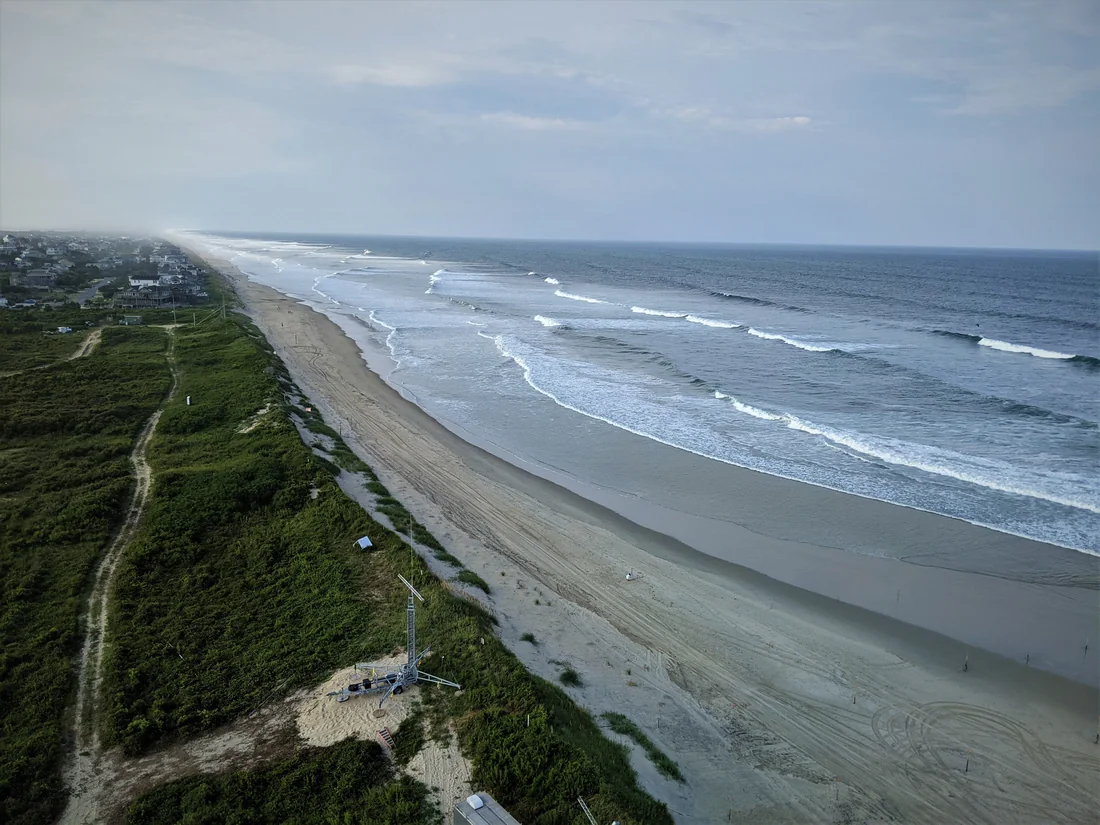
Oceanfront is worth exploring if being close to the surf is central to your plans. Look at the house from the rooms you will actually use: the living area, kitchen, bedrooms and decks. Notice what you can see while seated. Dunes can affect ocean views, and an oceanfront description does not necessarily mean the home has its own beach walkway.[1]
Put shoreline research alongside the showing. North Carolina's Division of Coastal Management explains that oceanfront setbacks depend on structure size and the applicable erosion-rate setback factor. Its long-term shoreline-change data are not a prediction of what a particular storm will do. Ask the local permit officer or DCM to explain the current requirements for the parcel, including any plans to add on, replace a structure or change an accessway.[2][3]
For the house itself, have qualified professionals assess the roof, exterior, decks, stairs and structural condition. Ask for available maintenance and repair records. An attractive deck and a beautiful view deserve the same careful inspection as the rooms inside.
Oceanside: walk the route before choosing the house
An oceanside home can be a good match when you want beach time to be easy but do not need the water directly outside. Start at the driveway and follow the route you would actually use. Count the street crossings, steps and turns. Picture carrying chairs, a cooler or a surfboard rather than judging the trip from an aerial photo.
Duck is a useful example of why this matters. The town says it neither owns nor maintains public beach accesses and directs access questions to the relevant homeowners' association or rental company. Before buying, have the access rights for that particular property checked through the appropriate documents and attorney. Nearby does not establish permission to use a walkway.[4]
Ask who maintains the access, whether guests may use it and whether parking is allowed. Check the current condition of the route as well. For a remote showing, I can include the route in a video tour so you can understand the trip as well as the house.
Soundside: decide how you want to enjoy the water
If your ideal day includes paddling, fishing or relaxing outdoors, put soundside and soundfront homes on the list. Separate the wish for a view from the need to launch a kayak or keep a boat. A soundside location alone does not answer any of those questions.
At a waterfront property, ask about shoreline access, water depth for your intended boat, shared facilities and any restrictions. Have an existing dock evaluated and its permits reviewed. If you hope to add or change one, check feasibility with Coastal Management and the local permitting office before making that improvement part of your purchase plan.[3]
Soundside does not mean flood-free. The National Weather Service documents Outer Banks soundside flooding caused by wind moving water around the Pamlico Sound. Check the property's flood information, elevation and drainage with the appropriate professionals, even if the water looks peaceful during your visit. FEMA also cautions that lower-risk flood zones still carry risk.[5][6]
Compare ownership budgets for actual houses
Avoid deciding that one setting is automatically the affordable choice. Compare specific homes using purchase price, taxes, association charges, utilities, maintenance needs and insurance quotes. Include the cost of looking after the house when you are away and a reserve for repairs.
North Carolina's Department of Insurance advises buyers to check whether windstorm and hail are included in the primary policy or require separate coverage. Standard homeowners insurance does not cover flood damage. Discuss the intended use of the home, coverage limits, exclusions and deductibles with an insurance professional before settling on your budget.[7][8]
If rentals are part of the plan, request a written, property-specific projection from a local manager, with the assumptions and expenses explained. Compare your planned owner weeks, fees, cleaning, utilities and maintenance alongside projected income. A location label does not guarantee bookings or a return, and gross rent is not the amount left to spend.
Keep the whole region in the conversation
These questions belong in a search from Corolla and Duck through Southern Shores, Kitty Hawk, Kill Devil Hills and Nags Head, and south through the Hatteras villages. Also consider Manteo and Roanoke Island, Ocracoke and mainland Currituck if they fit your plans. Do not carry one town's road layout or beach routine over to another.
Mainland Currituck's official visitor guide describes communities extending from Moyock to Point Harbor, including places along Currituck Sound and the Intracoastal Waterway. Include them when exploring your options, then test the trips to work, shops, boat access and the ocean from each home. For Ocracoke, look at the journey between the property, village destinations and National Seashore beach access separately.[9][10]
Choose your three priorities before scheduling showings: perhaps a verified beach walk, a comfortable porch and an ownership budget you can sustain. Tell me what you want your time here to feel like. I can help you compare homes across the region and identify the details to investigate, so the place you choose works as well in everyday life as it does in your imagination.
Sources & further reading
Sources checked October 14, 2026. Location descriptions are a starting point. Verify access rights, property boundaries, coastal requirements and insurance for the specific home with the appropriate professionals. Conditions and rules can change.
- Twiddy & Company — property location categories (terminology reference)
- NC Division of Coastal Management — oceanfront setbacks and erosion rates
- NC Division of Coastal Management — permits, records and local permit officers
- Town of Duck — beach access information
- National Weather Service — January 2022 coastal event and soundside flooding
- FEMA National Flood Insurance Program — flood zones and maps
- NC Department of Insurance — homeowners coverage considerations
- NC Department of Insurance — homeowners insurance FAQs
- Currituck County tourism — mainland communities
- National Park Service — Ocracoke Beach access and facilities